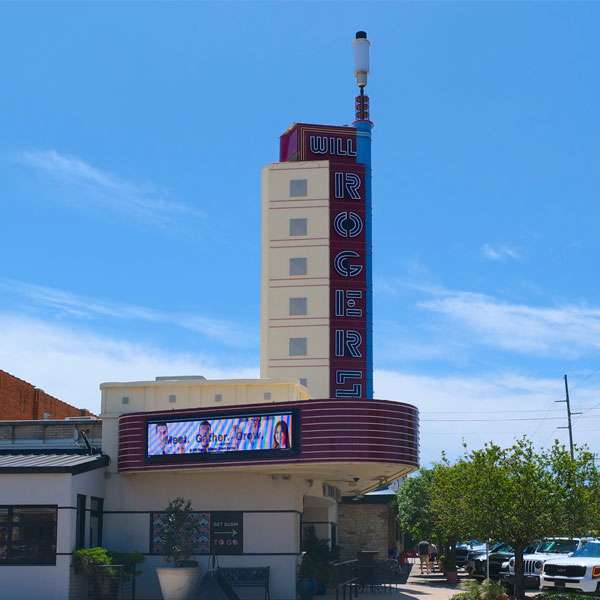
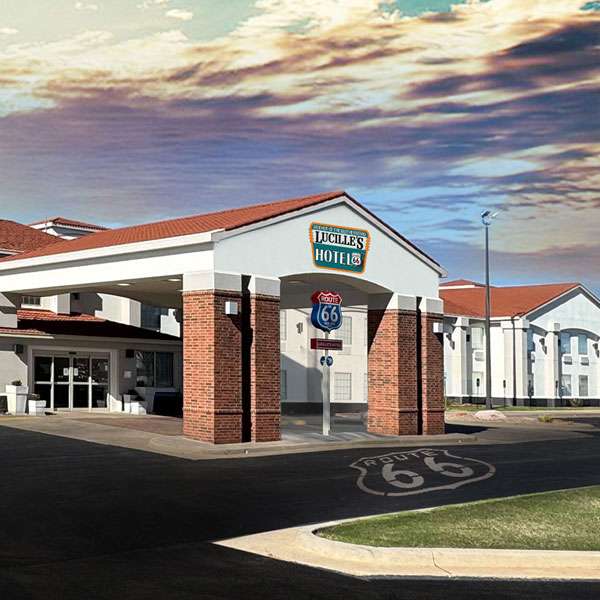
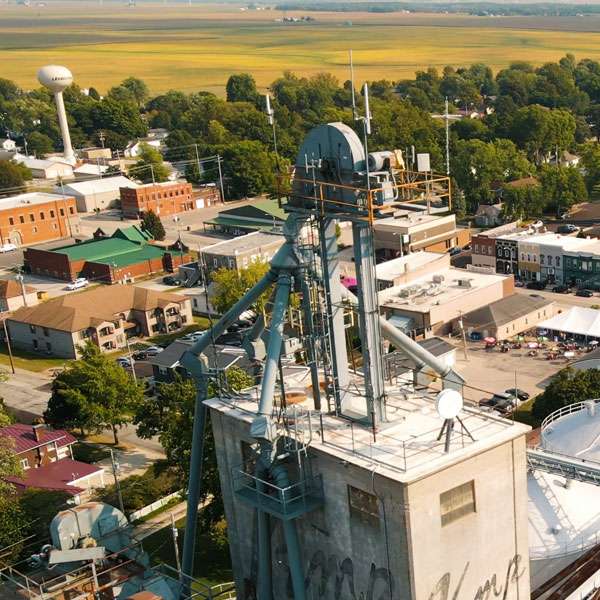
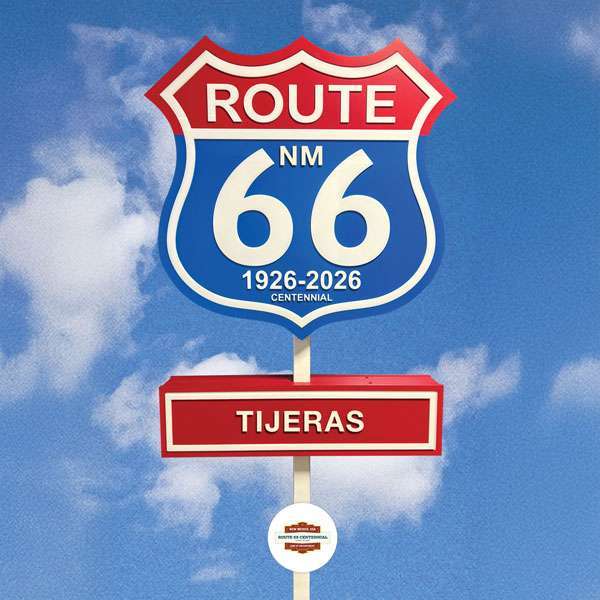
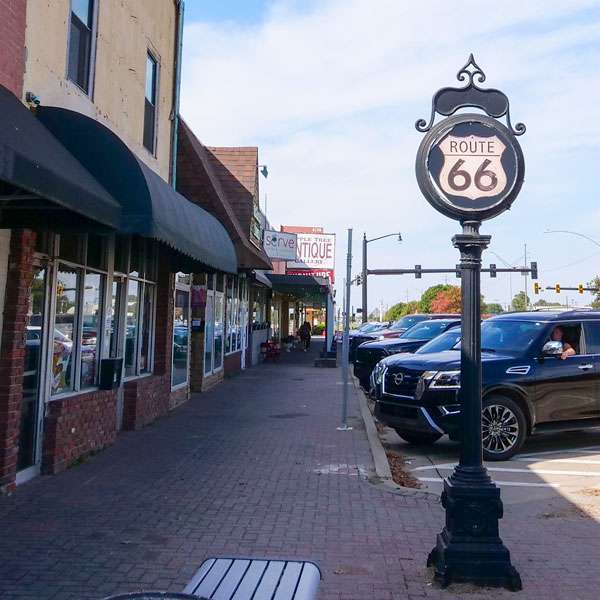
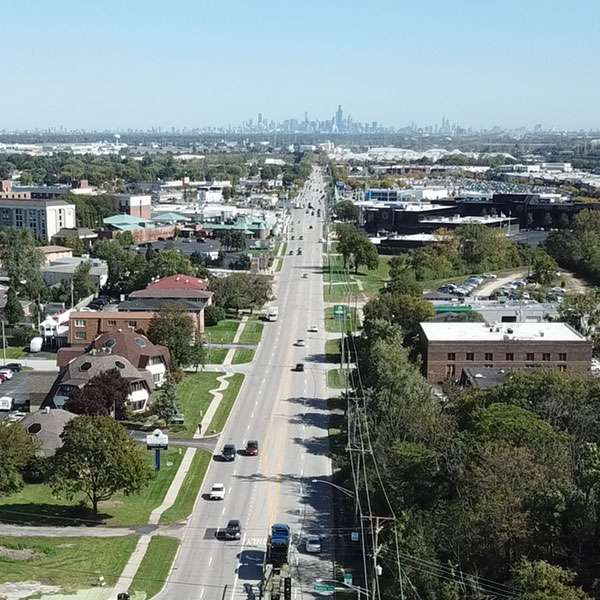
Nob Hill street view - Credit: New Mexico Tourism Department.
WELCOME TO NINE MILE HILL & ALBUQUERQUE!
First of all, congratulations are in order—you’ve made it to Nine Mile Hill, one of the most iconic vantage points on Route 66. Even Elvis reportedly stopped here in his pink Cadillac to sit and gaze east, where the dipping Mother Road threads through Albuquerque toward the distant Sandia Mountains.
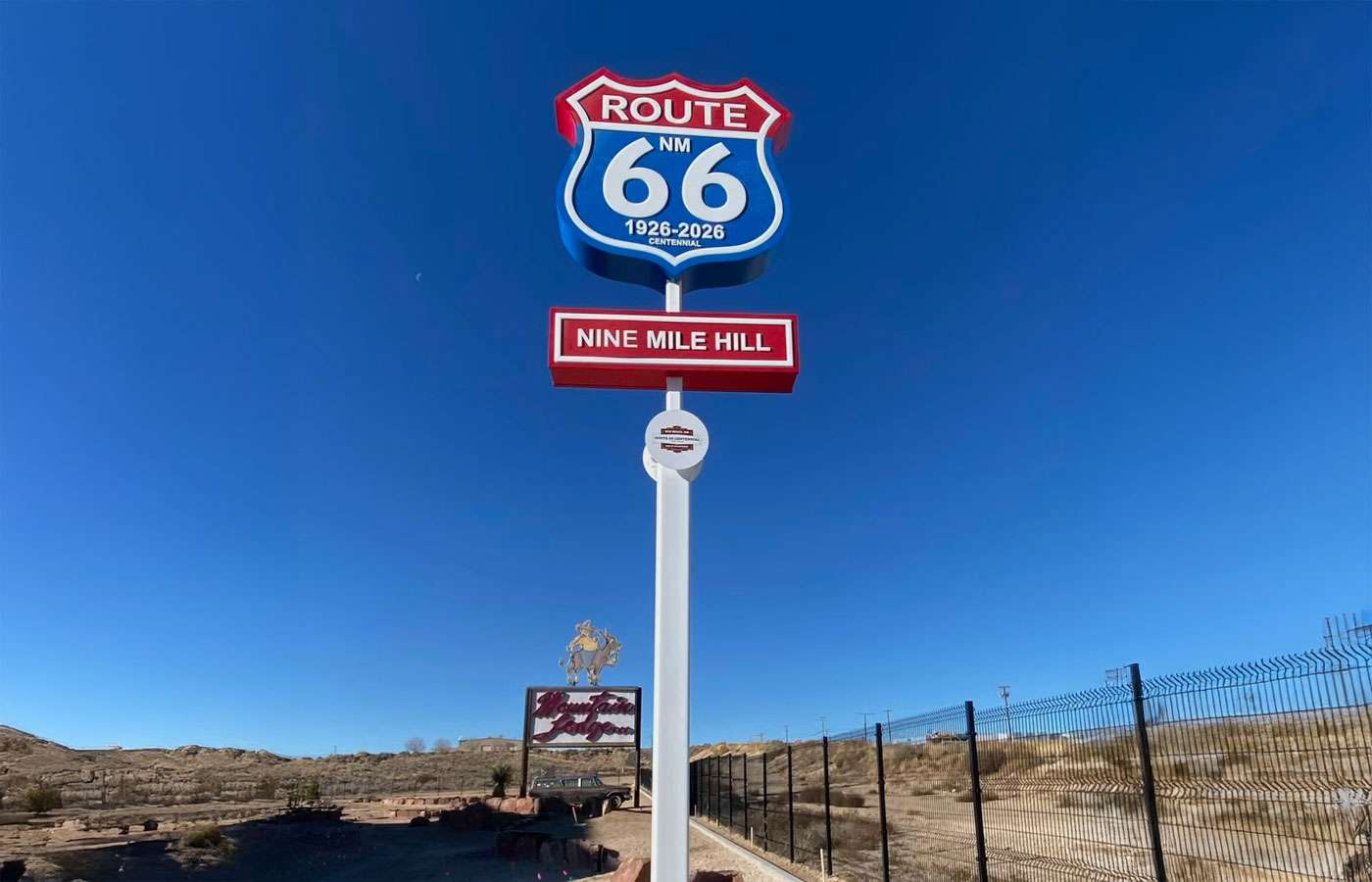
Route 66 Monument at Nine Mile Hill
In Albuquerque, Route 66 is called Central Avenue, and it stretches a full 18 miles—the longest urban stretch on the entire route between Chicago and the Pacific Ocean. With its glowing neon signs and mid-century charm, this vibrant city of 560,000 glitters in the high desert as an oasis for motorists. There's a lot to do here. Welcome.
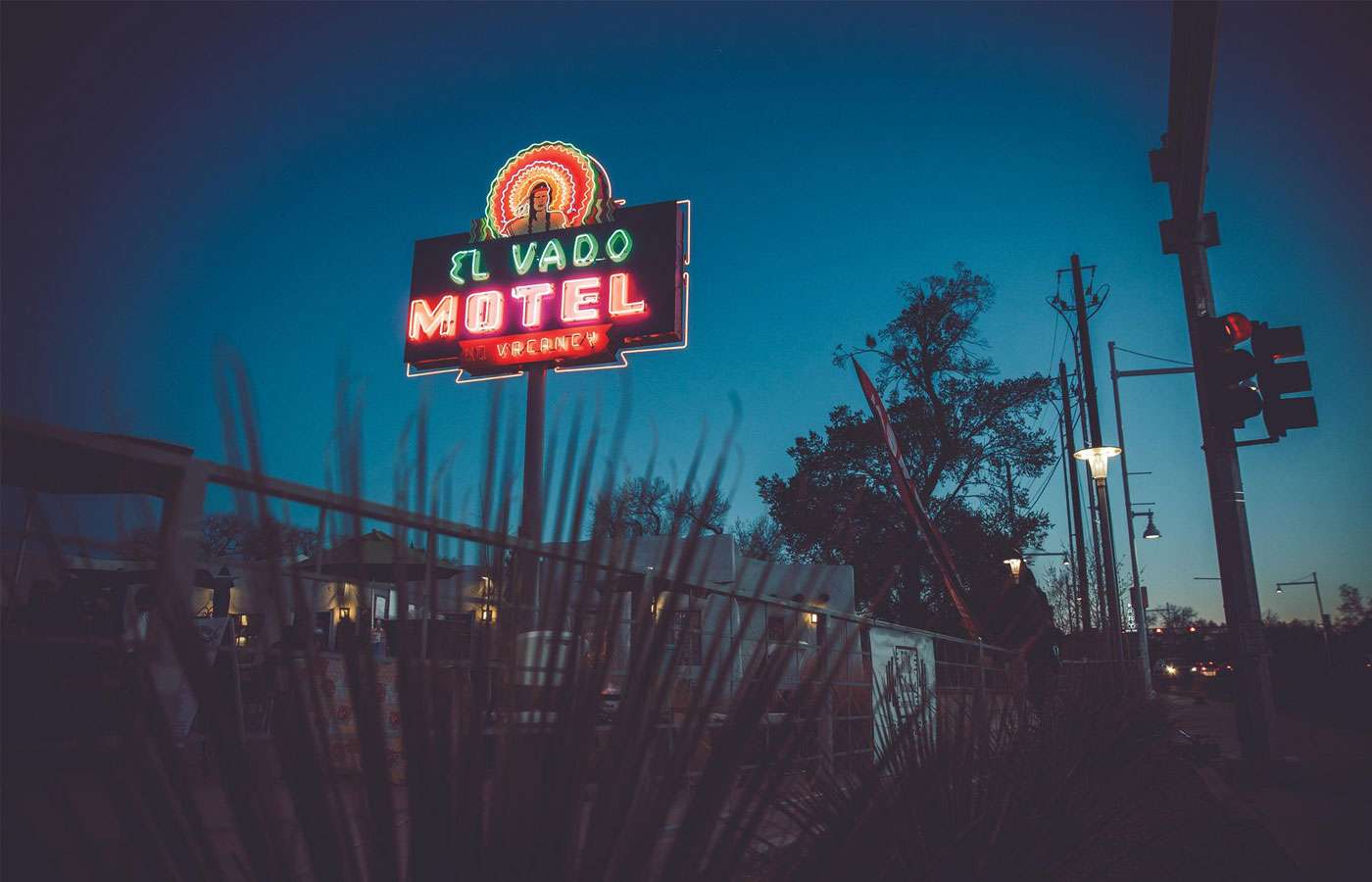
El Vado Motel neon sign - Credit: New Mexico Tourism Department
ROUTE 66 VISITOR CENTER
Opening to the public in fall 2026, the long-anticipated Route 66 Visitor Center, at exit 149 (Atrisco Vista Blvd), will immerse travelers in a century of Route 66 history and culture. Set at Albuquerque’s western gateway, the site will offer a permanent Route 66 timeline and exhibits curated by the Albuquerque Museum, exploring how the highway shaped life in New Mexico.
LINK: https://www.cabq.gov/artsculture/route-66-visitor-center
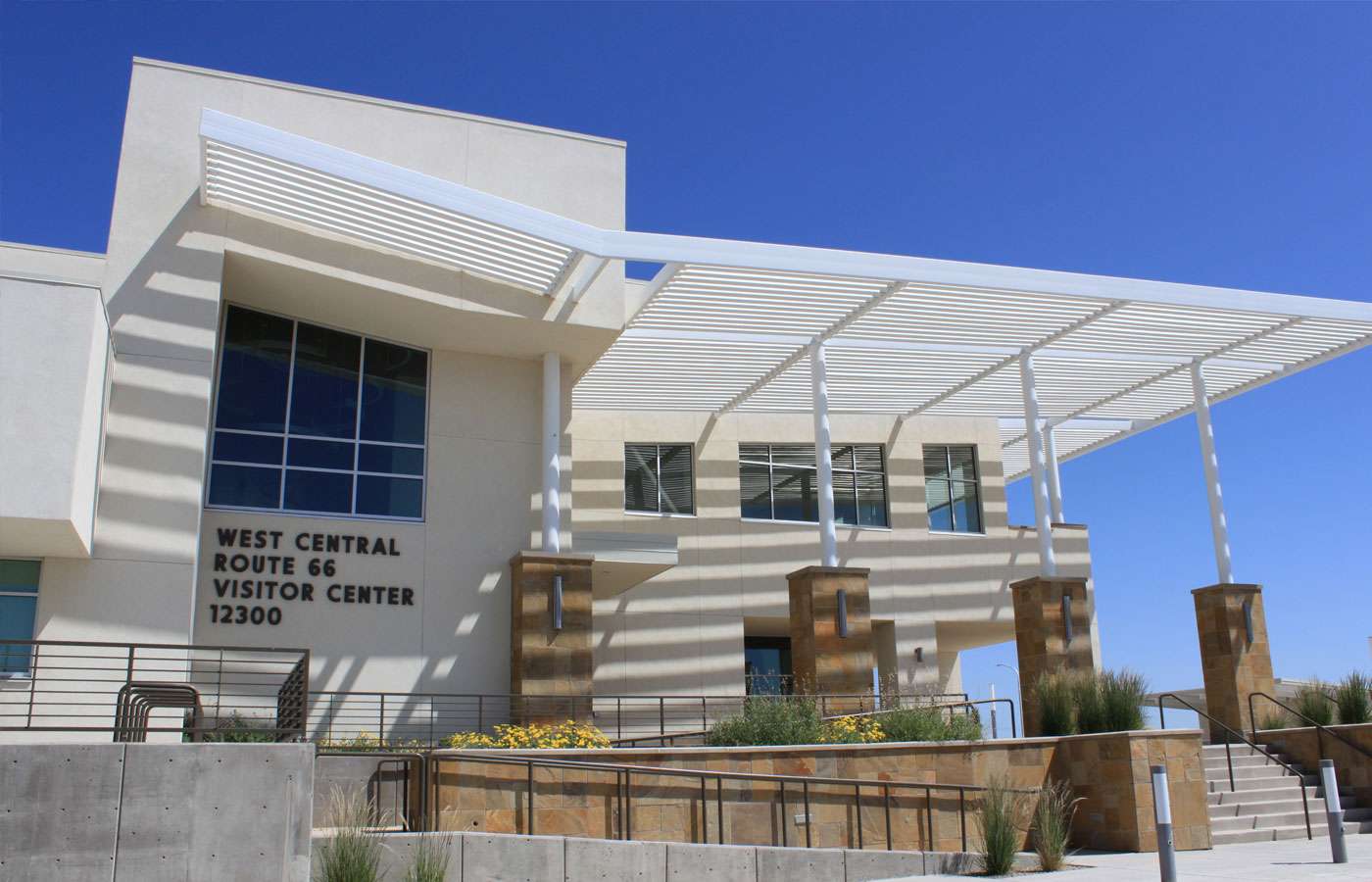
Route 66 Visitor Center @ Nine Mile Hill - Credit: City of Albuquerque Arts & Culture
PETROGLYPH NATIONAL MONUMENT
If you have a little time, there’s a superb detour just nine miles northeast of the visitor center at Petroglyph National Monument, which offers a walk through time far older than Route 66. “The petroglyphs and volcanoes have always been a landmark here,” says National Park Service ranger Rachel Taylor, who grew up in Albuquerque. “People have used them for hundreds of thousands of years, so it’s really interesting that Route 66 travelers are coming through the area the same way.”
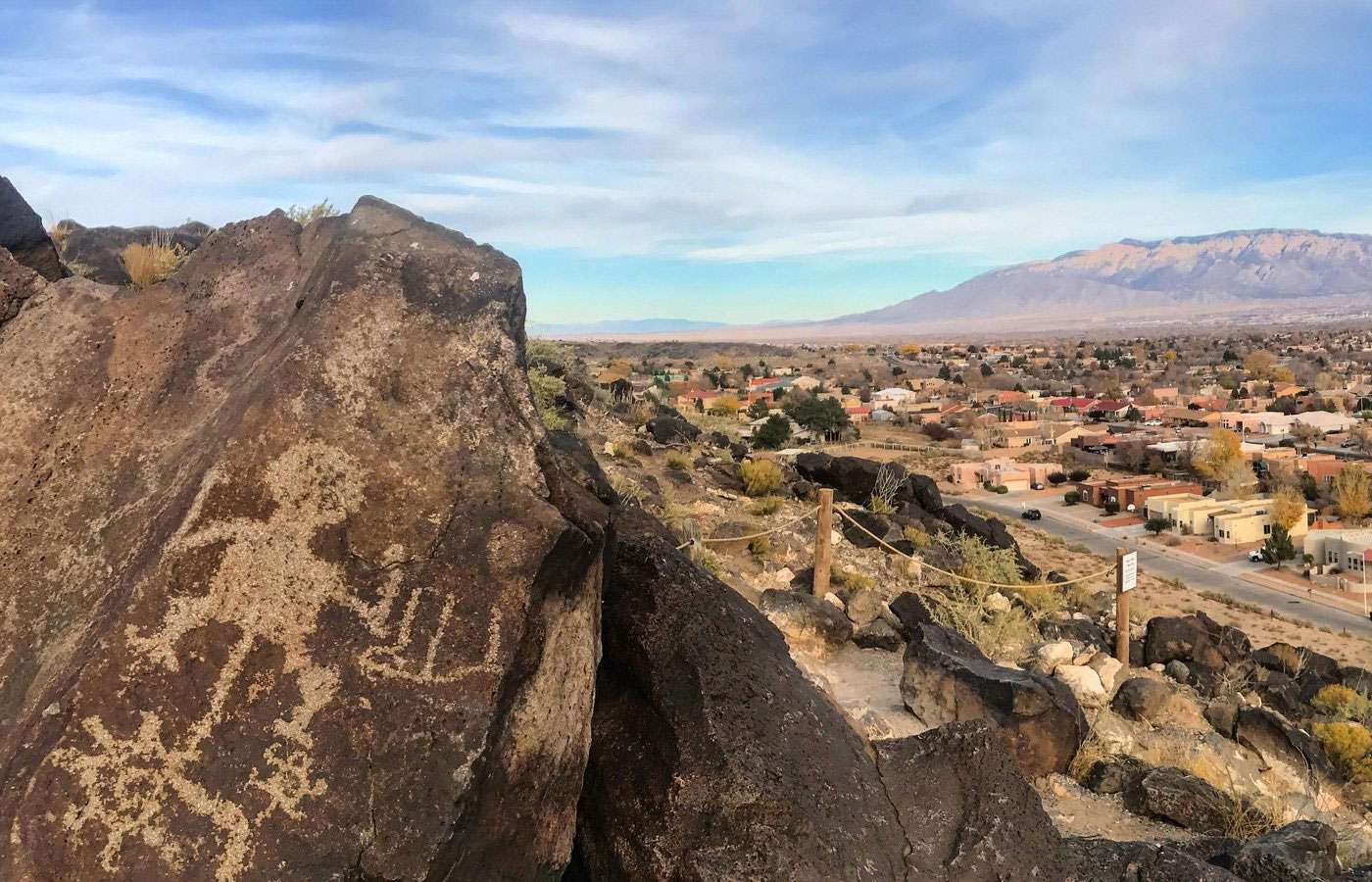
Petroglyph National Monument - Credit: Visit Albuquerque
The trails at Boca Negra Canyon, off Unser Boulevard, showcase images carved into black basalt between 400 and 700 years ago. Spirals, animals, and symbolic figures appear along the rocks, many of their meanings known only to the original carver or Pueblo elders. One of the most striking is a macaw parrot, “a symbol of grace and beauty,” as Taylor puts it, carved upright to show it was alive—evidence of ancient trade routes extending deep into Mexico.
The monument also preserves five extinct volcanoes, last active around 150,000 years ago. These can be viewed from several scenic hiking loops. Most accessible are the southern three—JA, Black, and Vulcan, nicknamed the “Three Sisters.” Black Volcano, the only cone open to hikers, rewards the climb with sweeping views of the rift valley, Route 66, and the city beyond.
“I didn’t even know about them until I started working here,” Taylor says. “One of the first things I did was go up the Black Volcano, and sit, looking out over the whole rift valley. It’s really cool. You can see how the whole area was formed.”
Admission is free.
LINK: https://www.nps.gov/petr/index.htm
ALBUQUERQUE MUSEUM
Albuquerque didn’t get name-dropped in the iconic Bobby Troup song, but Route 66 and New Mexico’s biggest city have been intertwined for nearly a century. For travelers, Albuquerque is known for its glowing neon motel and theater signs, some of which you can still see as you follow it through neighborhoods like Old Town, Nob Hill, and Downtown. The first takeaway is how alive it is.
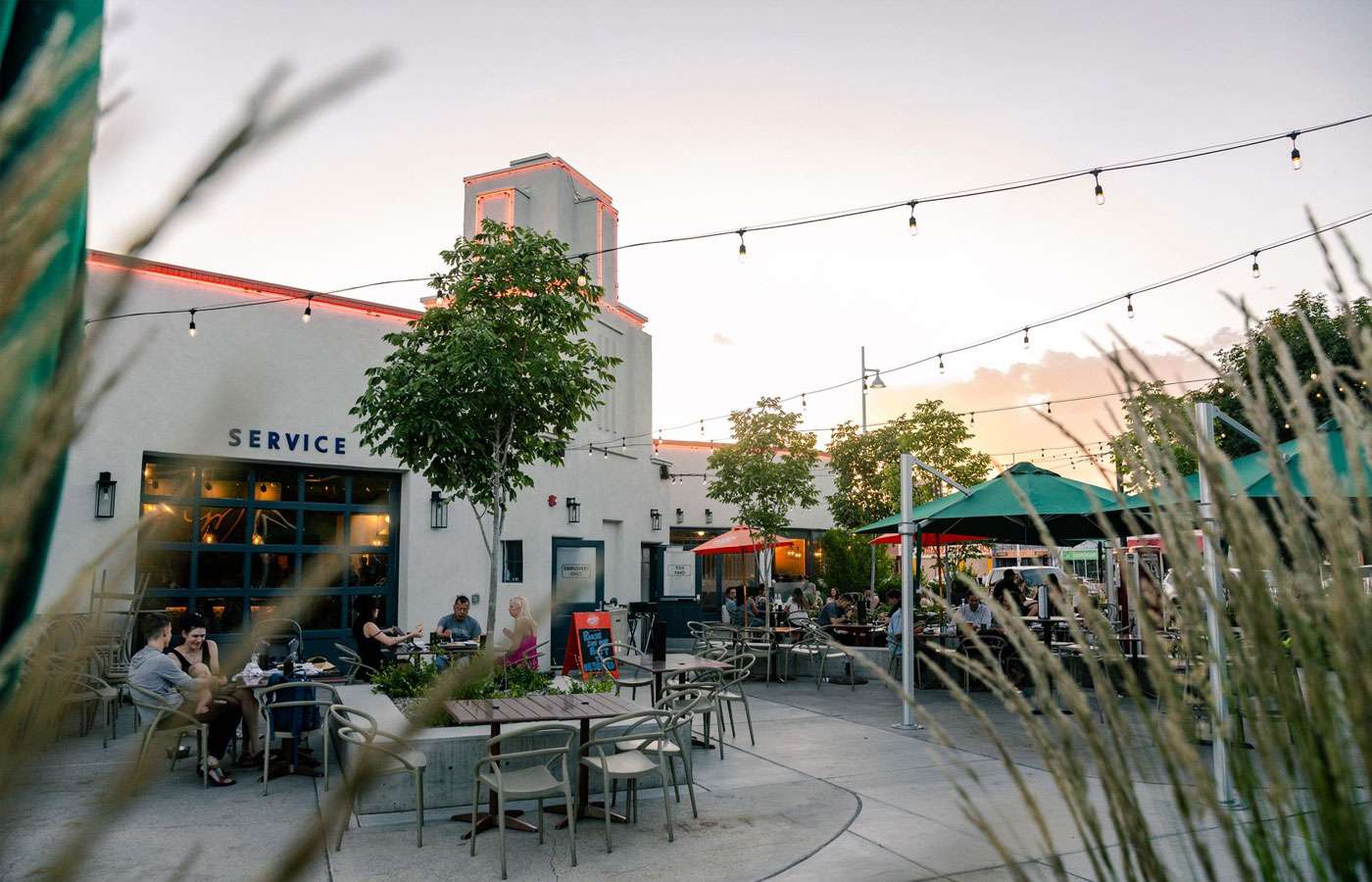
M'Tuccis Bar Roma in Nobb Hill Credit: New Mexico Tourism Department.
“We don’t call it Route 66. We call it Central Avenue,” says Alicia Romero, head curator and curator of history at the Albuquerque Museum. “It’s a road we interact with every single day.”
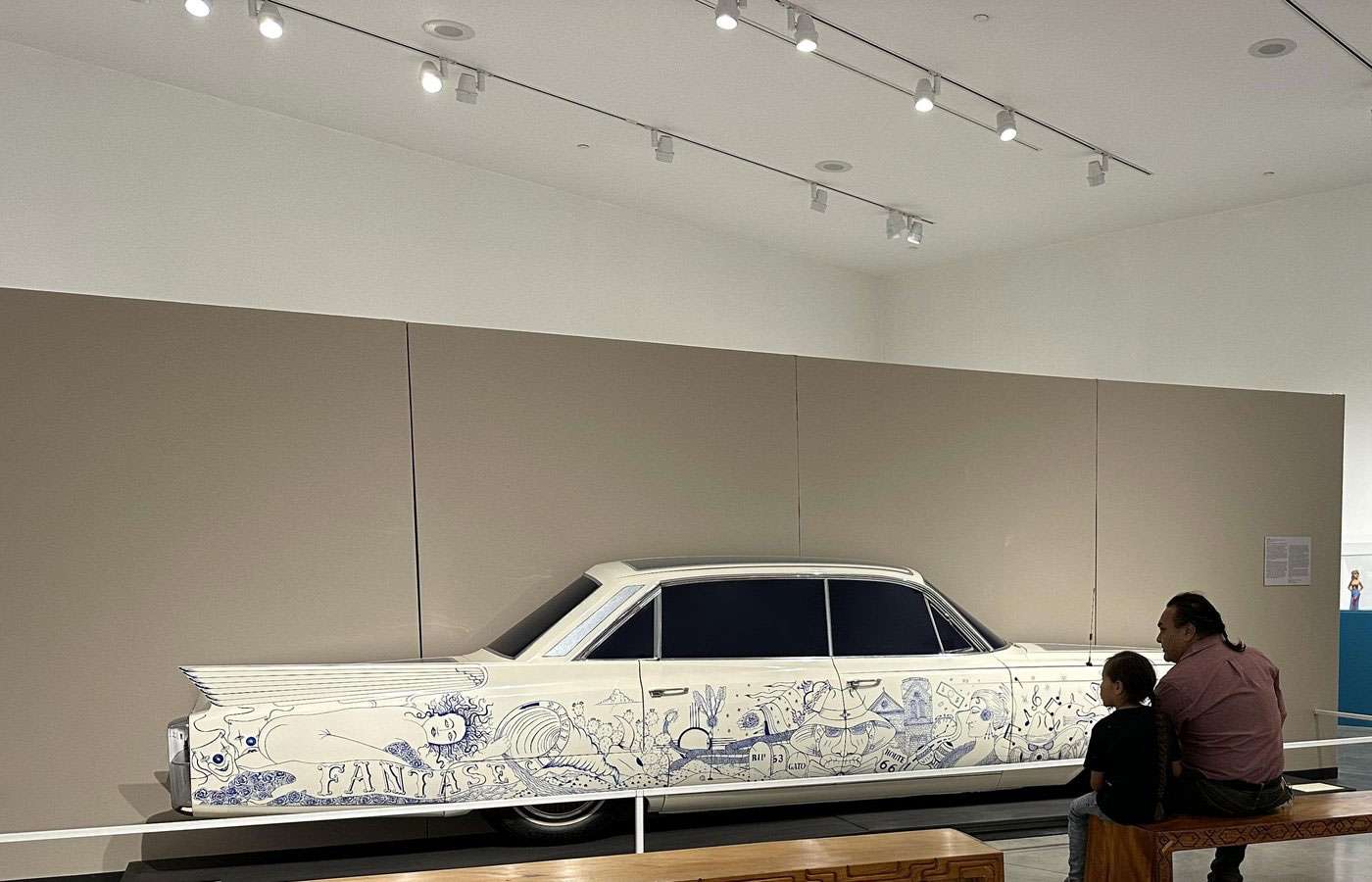
The Albuquerque Museum is one of the great Route 66 stops in the city. Alicia Romero helped plan the upcoming centennial exhibition, The Other Route 66: 100 Years of People, Identity, and Place in Albuquerque (June 6, 2026–January 3, 2027).
“It’ll talk about people who built the road—less about federal legislation and more about local people, workers who built the road, how the communities in New Mexico interacted,” explains Romero. It explores a deeper story to the road, asking the question, “Whose 66 are we celebrating?” While the neon and diners are iconic, Romero hopes visitors also reflect on the lived realities and hardships the road witnessed.
The National Hispanic Cultural Center - Credit: Visit Albuquerque
DOWN CENTRAL AVENUE APIECE
Elsewhere in town, the intersection of 4th Street and Central is a unique spot where the “old” and “new” alignments of the highway actually cross, due to 1937 adjustments to help shorten travel time. The 4th Street corridor joins the tranquil farmlands of Los Ranchos de Albuquerque in the north to the vibrant Barelas neighborhood in the south. Barelas is home to the National Hispanic Cultural Center and some of Albuquerque’s quintessential New Mexican eateries, where visitors should anticipate the state’s chile-loaded question: red or green? In Barelas, one can experience the sights, smells, and taste of New Mexico’s Route 66—from a smothered breakfast burrito in the morning to a flamenco performance at NHCC in the evening.
Many of the original Streamline-styled gas stations along Central Avenue have found new identities with appealing eateries, shops, and cafés. In the Nob Hill neighborhood, Route 66 architecture and signage are revitalized with a contemporary flair. 66 Diner is a signature example of a former service station updated with charming kitsch and retro decor to pay homage to the heyday of Route 66.
See Route66ABQ.com for more details.
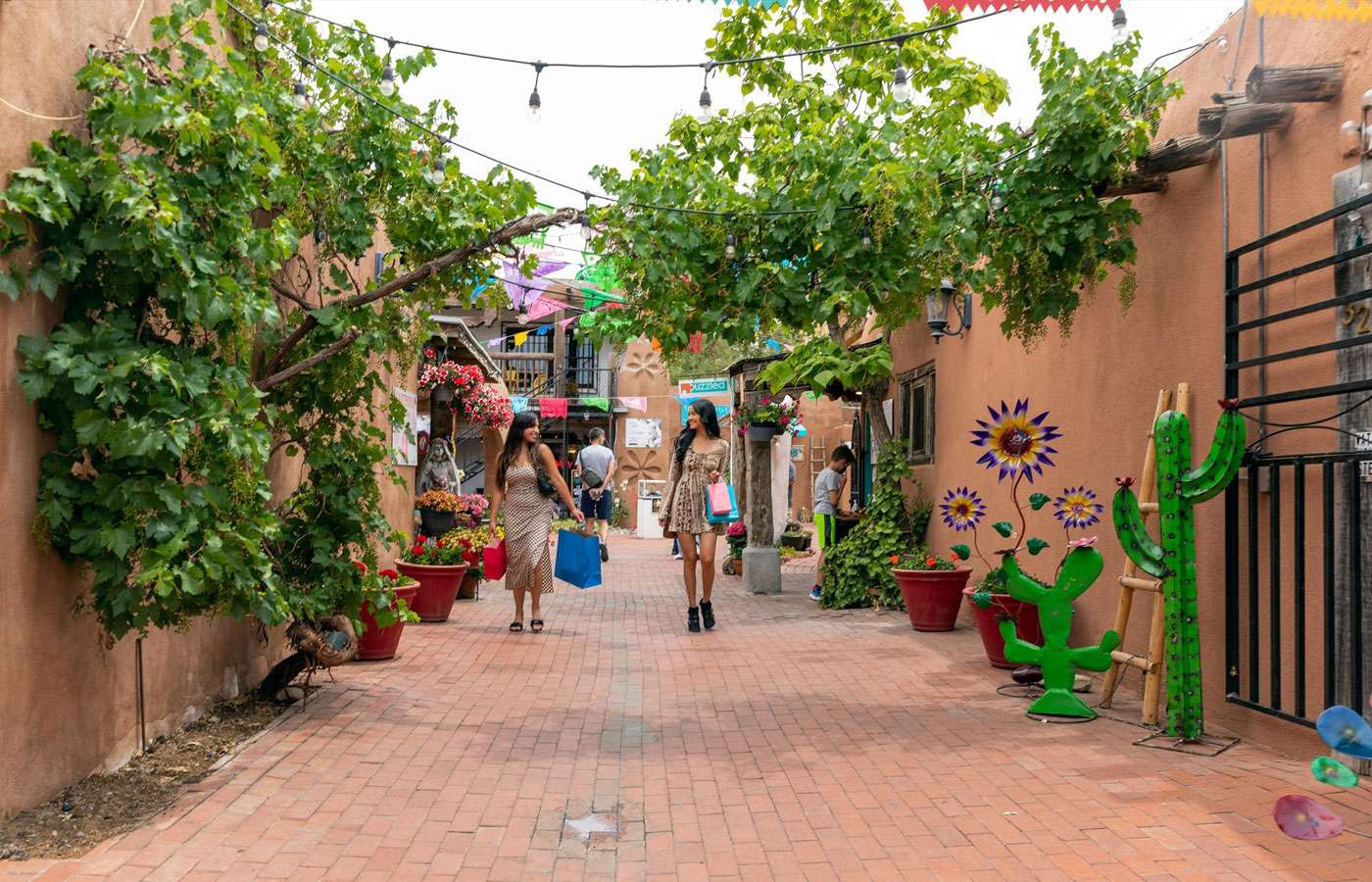
Old Town Albuquerque - Credit: New Mexico Tourism Department
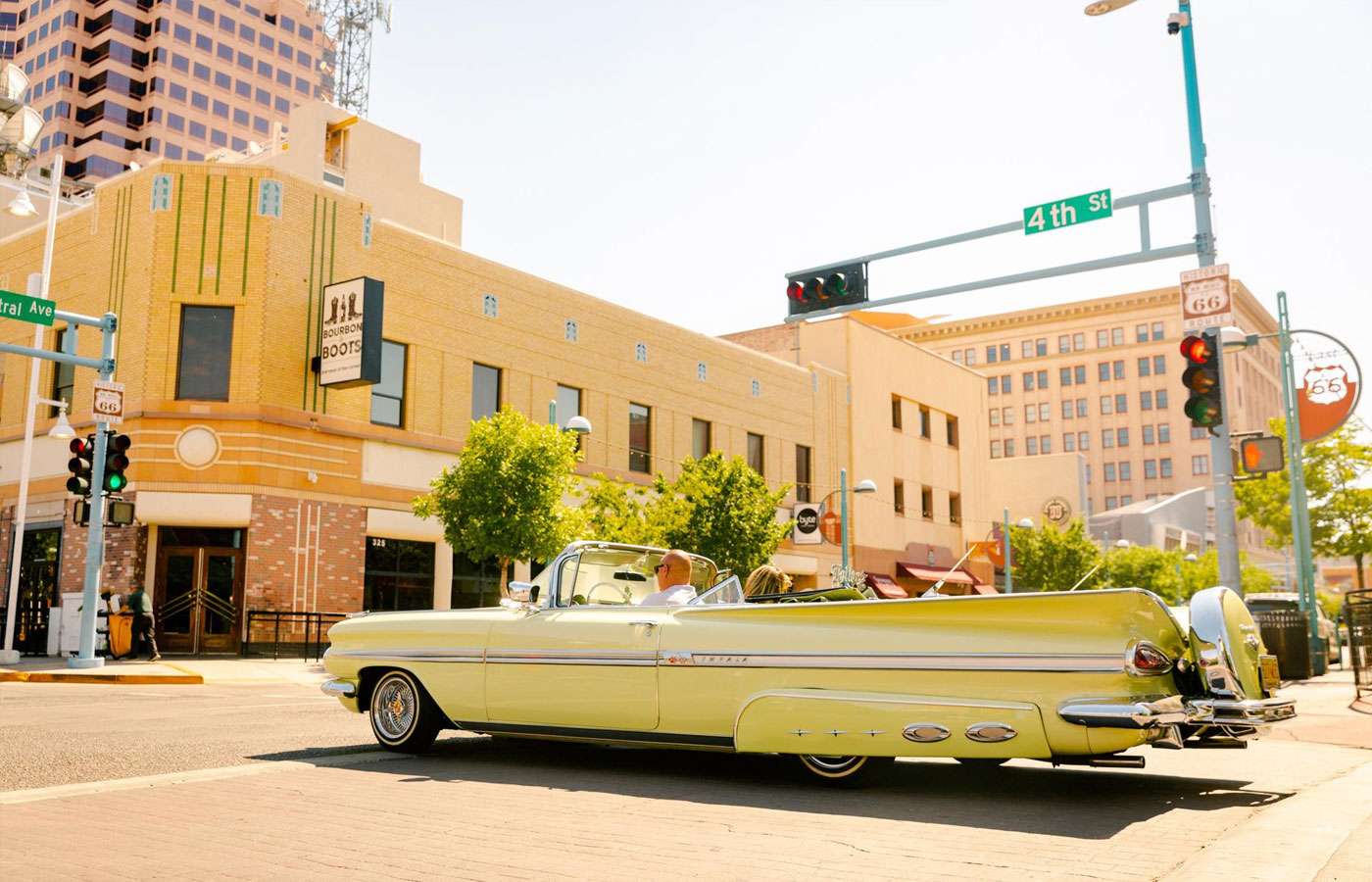
The Route 66 Crossroads (4th & Central) - Credit: New Mexico Tourism Department
Two historic theaters here spotlight a bit of Route 66-era glamor with modern entertainment. The KiMo Theatre, open since 1927, has a superb “Pueblo Deco design” (its name means “mountain lion” in Tiwa language), while Nob Hill’s Lobo Theater (www.loboabq.com/) dates to 1938. At both, you can attend live entertainment and other special events.
A fun tradition to witness is the local lowriders parading Route 66 on Sunday afternoons. Lowriding is a subculture rooted in the city’s history and heritage. Watch these incredible customized cars reach great heights while “hopping” in high-rise Downtown or among adobe walls in Old Town Albuquerque (est. 1706).
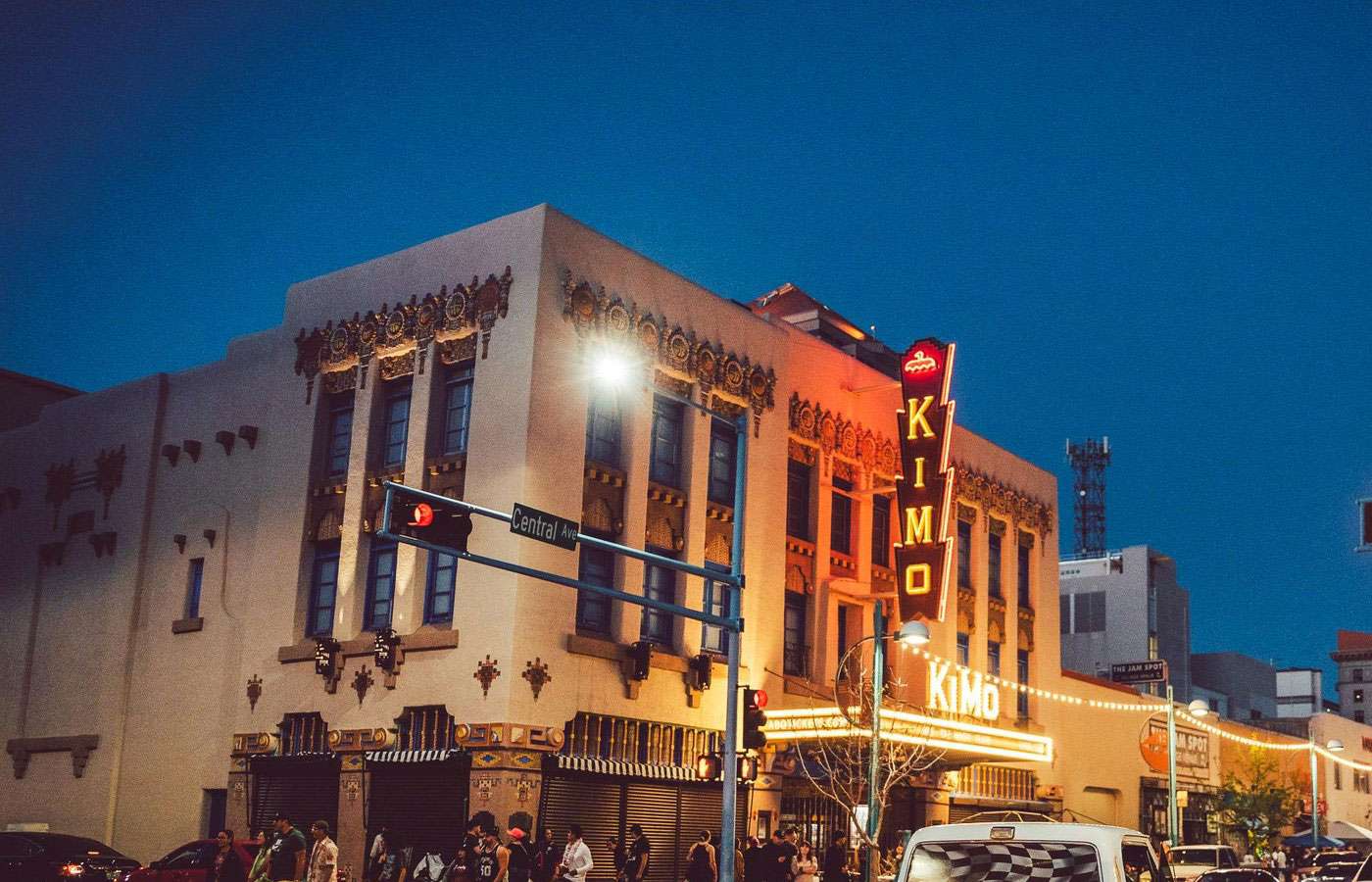
The KiMo Theatre - Credit: New Mexico Tourism Department
MORE INFORMATION
Route 66 in Albuquerque (Visit Albuquerque):
https://www.visitalbuquerque.org/route-66-centennial/
Unique places to stay:
https://www.visitalbuquerque.org/abq365/blog/post/quirky-places-to-stay-on-route-66-in-albuquerque/
Historic Diners in Albuquerque:
https://www.visitalbuquerque.org/abq365/blog/post/cuisine-of-the-crossroads-historic-diners-on-albuquerques-route-66/
Route 66 Visitor Center info:
https://www.cabq.gov/artsculture/route-66-visitor-center
Petroglyph National Monument:
https://www.nps.gov/petr/index.htm
KiMo Theatre:
https://www.cabq.gov/artsculture/kimo
Lobo Theater:
https://www.loboabq.com/
Keep the Journey Going
- All Destinations
- California
- Illinois
- New Mexico
- Oklahoma